
Written by Lynn Mugendi
Artificial Intelligence (AI) is changing the internet very quickly. AI can help you with homework, create art, or even generate music. But like many tools, it can also be misused.
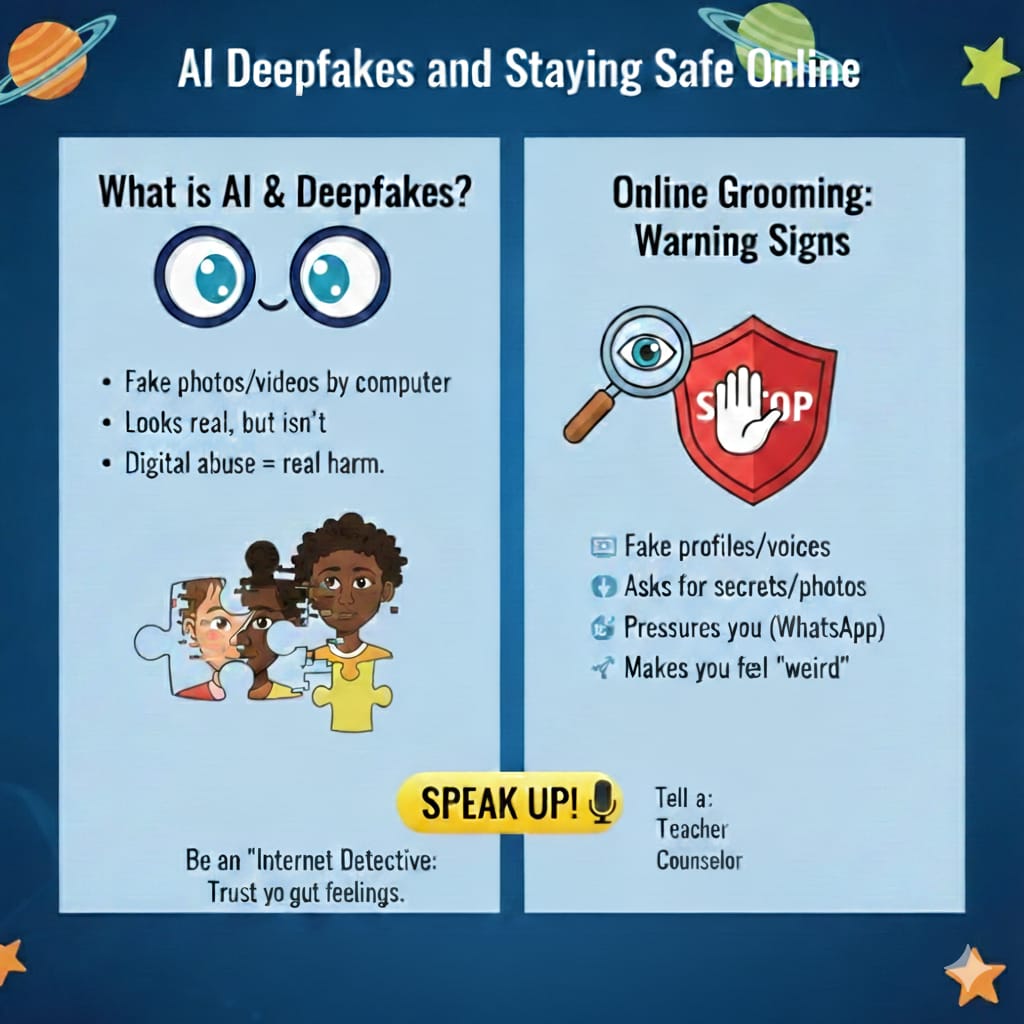
One way AI is misused is through something called deepfakes. Deepfakes are fake photos or videos that look very real. A computer creates them. Sometimes, people use deepfakes to make it look like someone is in a situation they were never actually in.
Even if the image is fake, the harm is real. Using someone’s face or body in an inappropriate way without their permission is a form of digital abuse. Your image belongs to you. No one has the right to use technology to embarrass, shame, or harm you.
Another serious risk is online grooming. Grooming happens when someone tries to gain your trust online in order to exploit or take advantage of you. With AI, a person might:
- Use a fake profile picture of someone who does not exist
- Use AI-generated voices
- Pretend to be a teenager
- Act like they share your hobbies and interests
They may try to become your “friend” first. Later, they might ask for private information, like your address, school or photos of your body. They may also ask you to keep secrets from your parents or guardians.
These are BIG warning signs.
If someone online:
- Asks you to keep secrets
- Makes you feel uncomfortable or “weird” inside
- Asks for personal photos
- Pressures you to move the conversation to a private app like whatsapp
You have the right to stop talking to them immediately.
You will NEVER be in trouble for telling a trusted adult. Talk to a parent, teacher, guardian or school counselor. Speaking up protects you and can also protect other young people.
You can think of yourself as an “internet detective.”
Ask yourself:
- Is this person really who they say they are?
- Why are they asking for this information?
- Does this feel safe?
Trust your instincts. If something feels wrong, it probably is.
AI is not bad on its own. It is a powerful tool. But some people misuse it. By understanding how it works and knowing the warning signs, you can enjoy the internet while keeping yourself safe.
Your safety matters. Your body and your image belong to you.
References:
- UNICEF (2023). Policy Guidance on AI for Children: Protecting Children in a Digital World.
- Internet Watch Foundation (2024). AI and the Evolving Landscape of Online Child Sexual Abuse Material.
- Livingstone, S., & Third, A. (2017). Children’s Rights in the Digital Age.
- Europol (2023). The Impact of AI on Online Child Sexual Exploitation.
- Save the Children (2024). Digital Safety and AI: A Guide for Young Explorers.