
Written by Alice Njoki
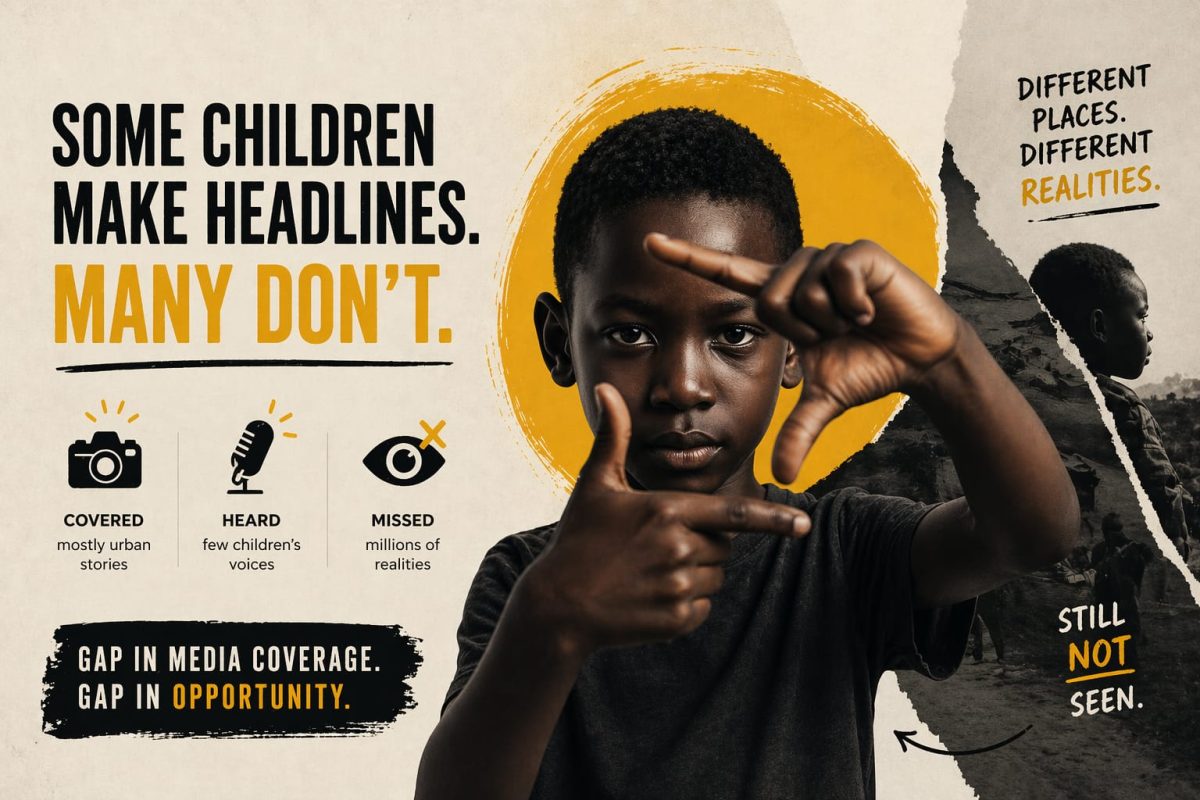
Children from marginalized communities continue to receive little to no visibility in mainstream media, according to a new report examining how children are represented in news and digital platforms. The findings show that while children do appear in media coverage, most stories focus on a narrow group often leaving out those in the rural areas, informal settlements, and other vulnerable situations.
The report shows that this gap is not just about numbers, but about whose realities are seen as important. In many cases, media attention is mostly centred in urban areas, creating an imbalance that leaves out children from remote areas and neglected communities and as a result, key issues affecting these children such as limited access to education, healthcare, and protection remain underreported.
Experts have long noted that the media plays a major role in shaping public awareness and influencing policy decisions. When certain stories are consistently ignored, the urgency to address those issues fades. This means that when children’s voices are missing in the media, their needs are less likely to be heard, understood or prioritized.
Beyond visibility, the report also raises concerns about how children are portrayed. Many stories present children mainly as victims of poverty, violence, or crisis. While these issues are real and important, this is just a one-sided narrative that often fails to show the full picture.
And this is especially clear in many documentaries, where children are often shown only in situations of extreme poverty or suffering. While these images may aim to raise awareness, they can create what is known as a “single story”a repeated narrative that defines children only by hardship. What is often missing are stories of resilience, creativity, and everyday life, which are just as real.
Children are also rarely given the chance to share their own views, ideas, or solutions. This limits how audiences understand their lived experiences and reduces them to subjects of stories rather than active voices within them. This reflects a wider challenge in journalism balancing storytelling with ethical responsibility. Reporting on children requires care, from protecting their identity to respecting their dignity. Without these safeguards, media coverage can unintentionally cause harm, even when the goal is to inform.
At the same time, the rise of digital media is changing how stories are told and shared. Social media platforms have made it easier to highlight underreported issues and amplify voices that might otherwise go unheard.
However, this also comes with risks, including misinformation and the sharing of children’s content without proper consent or protection. Despite these challenges, the report points to a way forward. It calls for more inclusive and balanced storytelling coverage that reflects the diversity of children’s experiences across different regions and backgrounds. It also stresses the need to create space for children to take part in telling their own stories, rather than being represented only through adult perspectives.