
Written by Alice Njoki
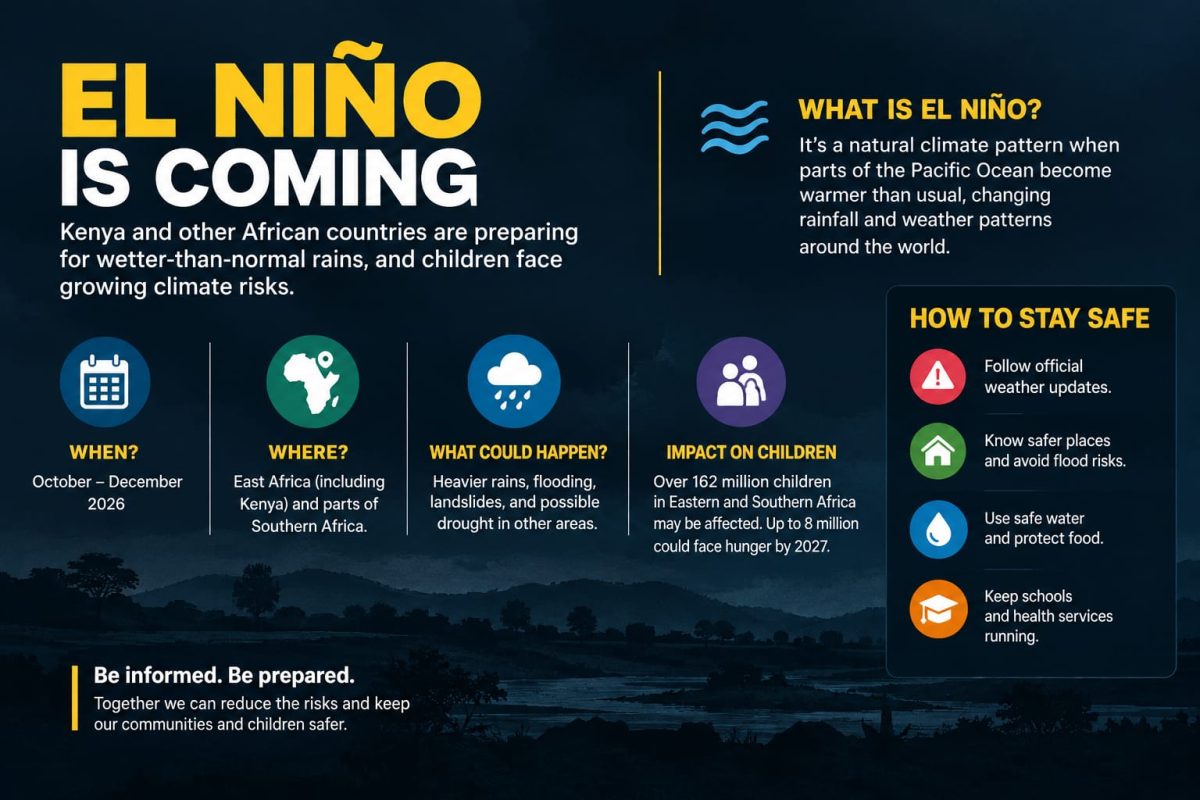
Kenya is preparing for the October to December 2026 rainy season, with climate experts forecasting wetter-than-normal conditions across several parts of the country and the wider Greater Horn of Africa. The forecast comes as El Nino conditions have developed in the Pacific Ocean and are expected to continue through the end of the year, increasing the chance of heavier rainfall in parts of East Africa.
The expected weather is linked to changes in the Pacific Ocean, where unusually warm sea-surface temperatures are affecting wind, rainfall and temperature patterns around the world. This natural climate pattern is called El Nino. It does not mean that every place will receive heavy rain, but it can change where and when rainfall occurs. In East Africa, the current forecast points to a higher chance of wetter conditions, while other parts of Africa may experience drier conditions. Climate change is separate from El Nino, but it can make some extreme weather impacts more serious.
For Kenya, the forecast shows a 90 percent chance of increased rainfall in north-eastern parts of the country. There is also a high chance that some areas of central Kenya and the Lake Victoria Basin will receive more than 400 millimetres of rain during the season. Similar high rainfall is expected in parts of Somalia, Burundi, western Rwanda and western Tanzania. These figures do not mean that it will rain heavily every day. Above-normal rainfall simply means that the total amount of rain expected during the season is higher than what is normally recorded. However, when large amounts of rain fall within a short time, rivers and drainage systems can become overwhelmed, increasing the risk of floods, flash floods and landslides in areas that are vulnerable.
The effects will not be the same everywhere. While much of East Africa is expected to receive more rainfall, some parts of Southern Africa could face poor rainfall and drier conditions. This difference matters because too much rain can damage homes, roads, schools and crops, while too little rain can reduce water supplies and food production. ICPAC has therefore advised countries and communities to use the rainfall forecast together with regular weekly and monthly weather updates as the season continues.
The possible effects on food are also a major concern for children. A recent regional analysis found that about 6 million children in Kenya, Uganda, Zambia, Malawi, Mozambique and Madagascar are already facing severe food shortages, and this number could rise to about 8 million by early 2027 if conditions worsen. Across the same six countries, the number of people facing crisis-level hunger or worse is projected to increase from about 12.6 million to 16.4 million by March 2027. These figures show why changes in rainfall are not only about weather, but can also affect food, farming and the daily lives of families.
UNICEF estimates that more than 162 million children across Eastern and Southern Africa, more than two out of every three children in the region, live in areas that could be affected by the 2026/2027 El Niño. The risks include flooding, drought, extreme heat, food shortages, unsafe water, health problems and interruptions to education. For children, these effects can mean missing school when roads or schools are affected, having less access to food and clean water, or facing greater safety risks when families are forced to leave unsafe areas.
Kenya and other countries in the region are therefore being encouraged to prepare before the most serious effects are felt. Preparedness includes :
.Clearing drains and water channels in flood-prone areas to reduce the risk of flooding.
.Bridges, roads and other critical infrastructure in areas vulnerable to flooding are being inspected, while early warning systems are being strengthened through local administrators and Nyumba Kumi networks.
.Monitoring weather forecasts,identifying areas at risk of floods and landslides
.Protecting important services,preparing health systems and making sure communities know what to do when warning are issued
.Emergency supplies are being pre-positioned to facilitate rapid response, with specialised teams placed on standby for rescue, evacuation and damage assessments.
.Mapping floods and other high-risk hotspots to guide early response, evacuation and rescue efforts.
UNICEF is also calling for early action such as preparing supplies, keeping health, water and education services running, and using weather forecasts to act before disasters happen.
For families and children, following official weather updates and taking warnings seriously can help reduce risks during the rainy season. People living in flood-prone areas should know safer routes and places to go if they are advised to move, while schools and communities can also prepare for possible disruptions.