
Written by Alice Njoki
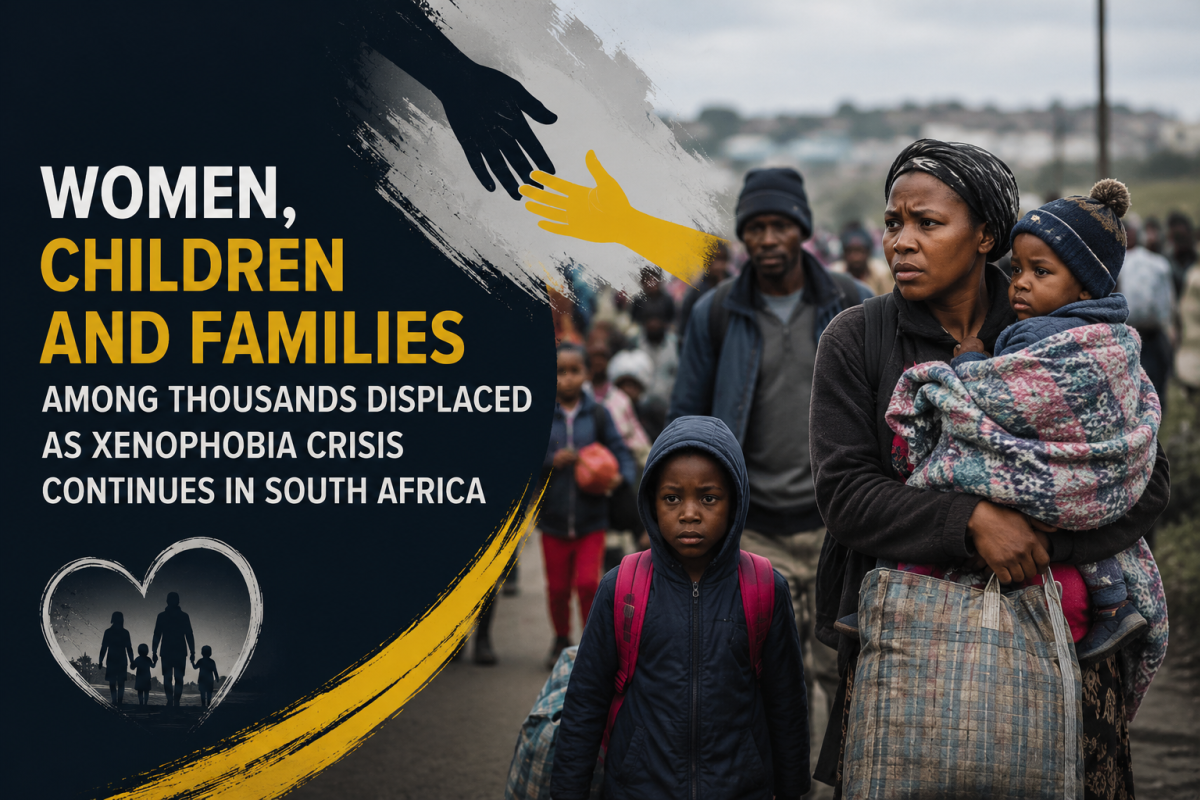
For weeks now, thousands of people in South Africa have been living in fear as xenophobic tensions continue to spread in parts of the country. The crisis has forced many families, including pregnant women who just gave birth and children, to leave their homes and seek safety in temporary shelters and transit sites.
Among those most affected are Malawian nationals who had been living and working in South Africa for years. Many had built lives there, running businesses, raising families, and contributing to their communities. But after facing threats, intimidation, and fears of violence, many were forced to flee with little more than the belongings they could carry.
According to reports, more than 1,200 displaced Malawians have started returning home, while thousands of others continue to wait for assistance. In Durban, temporary shelters have housed large numbers of displaced people, including pregnant women, young children, and elderly people who were forced to leave their communities behind.
The scale of the crisis has been alarming. Humanitarian organisations reported that around 8,000 displaced people had gathered at transit sites in Durban at the height of the tensions. Many arrived with few possessions and no clear idea of what would happen next. Some spent days sleeping in crowded shelters while waiting for transport or support.
For families, the impact has been devastating. Many have left behind their homes, jobs, businesses, schools, and the communities they had known for years. For children, the disruption has been especially difficult. Instead of attending school, spending time with friends, and enjoying the routines of everyday life, many have found themselves living in temporary shelters and facing an uncertain future.
The crisis has once again brought attention to xenophobia, which is the fear, dislike, or discrimination against people from other countries. South Africa has experienced several waves of xenophobic violence over the years, with attacks targeting migrants from countries such as Malawi, Zimbabwe, Mozambique, Ethiopia, Somalia, and the Democratic Republic of Congo.
While the reasons behind xenophobia are complex, many experts point to challenges such as unemployment, poverty, inequality, and frustration over limited opportunities. In difficult economic times, migrants are sometimes unfairly blamed for problems such as job shortages, crime, and pressure on public services. However, human rights groups and researchers have repeatedly warned that migrants are often used as scapegoats for deeper social and economic challenges that affect entire communities.
What makes the situation particularly painful for many Africans is the history behind it.
During the struggle against apartheid, many African countries stood alongside South Africa. Countries across the continent provided support, shelter, education, and training to South Africans who were fighting against racial oppression. Thousands of South African exiles found refuge in neighbouring countries and elsewhere across Africa when they needed protection.
That shared history has left many people asking difficult questions today. If African nations once stood together during one of the continent’s darkest periods, why are fellow Africans now being threatened and forced to flee from other Africans? Why are families being targeted because of where they were born?
There are no easy answers. But what is clear is that the people suffering most are often those with the least power to change the situation. Women, children, and vulnerable families are once again paying the highest price for tensions they did not create.
As some displaced families begin the journey back to Malawi and others continue to wait for support, many are hoping for more than just safety. They are hoping for a future where people are judged not by their nationality but by their shared humanity.
The crisis serves as a reminder that every person deserves dignity, respect, and protection, regardless of where they come from. At a time when Africa is working towards greater unity and cooperation, many believe the answer lies not in division, but in remembering the values of solidarity and compassion that have long connected people across the continent.