
Written by Alice Njoki
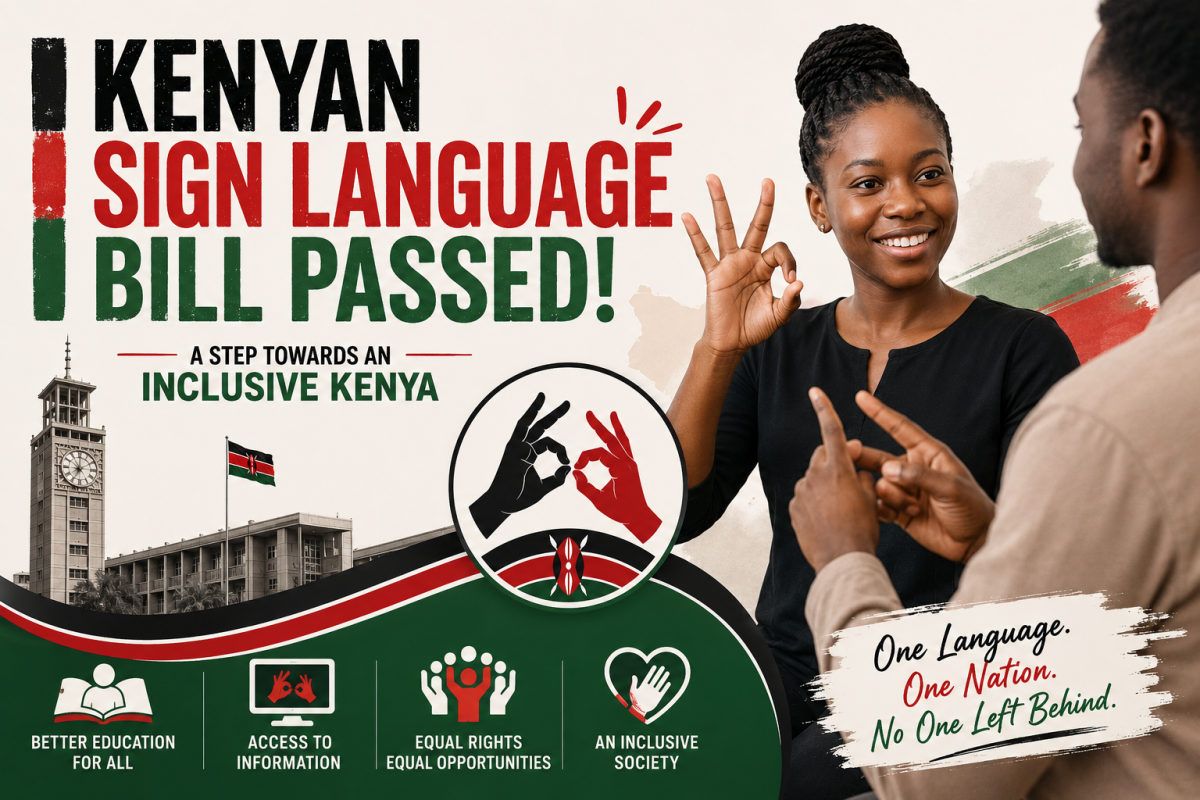
On June 24, 2026, the National Assembly passed the Kenyan Sign Language Bill, 2025, bringing Kenya one step closer to improving access to education, information and public services for people who are deaf, hard of hearing and deafblind.
The Bill, which now awaits further approval before it can become law, seeks to promote the use of Kenyan Sign Language across the country and strengthen the rights of persons with hearing disabilities. It is designed to give effect to provisions in the Constitution that recognise Kenyan Sign Language as an official means of communication and guarantee equal access to services for persons with disabilities.
If approved, the proposed law could transform the lives of thousands of children and adults who often face communication barriers in schools, hospitals, courts and other public spaces. Advocates say many deaf people struggle to access information and services due to a shortage of interpretation services and limited awareness of sign language among the public.
A key focus of the Bill is education. It requires the Cabinet Secretary for Education to facilitate sign language lessons for parents, guardians and family members of deaf, hard-of-hearing and deafblind children. Supporters believe this will help families communicate more effectively with their children, strengthen relationships and improve learning outcomes.
The legislation also proposes the integration of Kenyan Sign Language into early childhood and basic education curricula. In addition, public institutions of higher learning will be required to provide free interpretation services for learners who need them, helping ensure that students are not left behind because of communication challenges.
Beyond education, the Bill aims to improve access to information. Television stations will be required to provide closed captioning and Kenyan Sign Language interpretation during news broadcasts, educational programmes and national events. This could enable more deaf and hard-of-hearing people to stay informed about important issues affecting their lives and communities.
The passage of the Bill has been welcomed by disability rights advocates, who say it represents an important step towards a more inclusive society. They argue that when communication barriers are removed, children and adults with hearing disabilities can participate more fully in education, employment, leadership and regardless of how they communicate, they can access opportunities, services and information on an equal basis.