
Written by Gloria Ngatha
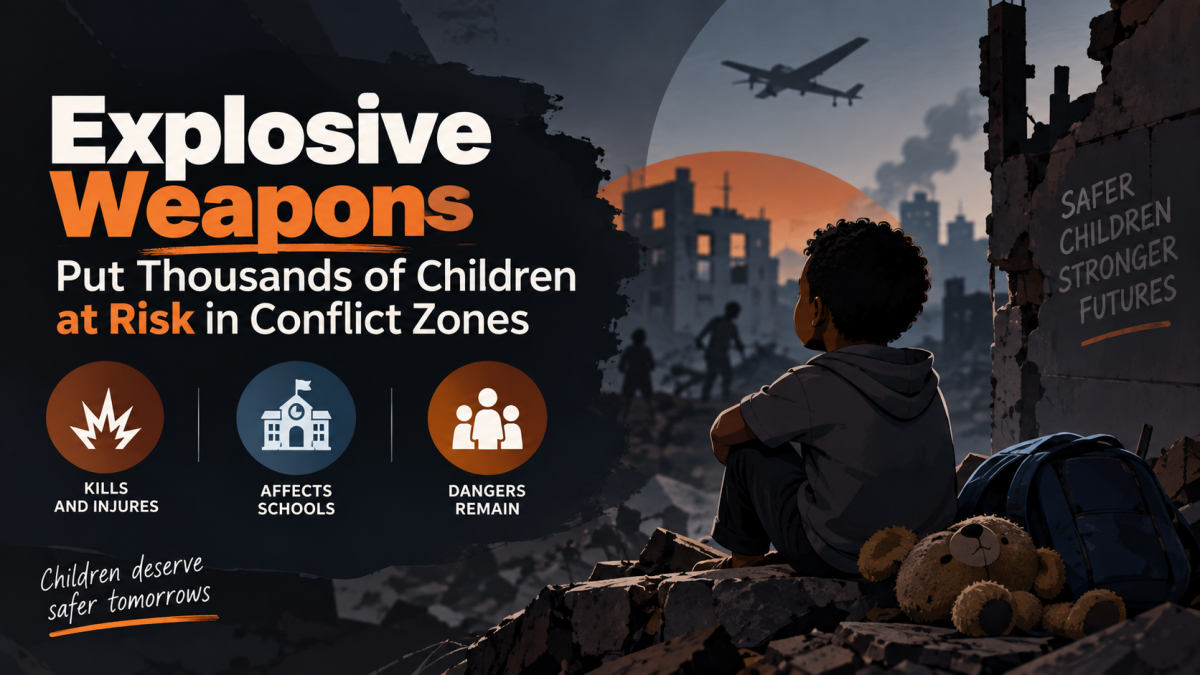
More than 12,000 children were killed or injured by explosive weapons in 2024, according to research by Save the Children, as landmines, unexploded weapons and other explosives continue to threaten children in areas affected by conflict. The research found that explosive weapons were the largest named weapon category recorded in United Nations reports of child casualties, with children making up about 46 per cent of civilian casualties from landmines and explosive remnants of war where the ages of victims were known.
The research, which examined data from 2020 to 2025, also highlights the growing use of drones in conflicts. Drones can be used for surveillance and attacks, putting people living in affected communities at risk. Attacks around homes, schools and hospitals can disrupt children’s education, access to healthcare and daily lives, even when they are not directly involved in the fighting.
The danger does not always end when fighting stops. Landmines and unexploded weapons can remain in communities for years, putting children at risk as they walk to school, play outside or move around their neighbourhoods. In Myanmar, UNICEF recorded 745 civilian casualties from landmines and other explosive ordnance in 2025, including 155 children.
Children in Ukraine have also faced increasing danger from drone attacks. Save the Children reported that attacks involving drones on schools increased by 358 per cent in 2025 compared with the previous year, forcing some children to return to learning from home.
The impact can continue long after an explosion. Children who survive explosive injuries may need medical treatment, rehabilitation and long-term support, including help to return to school and take part in everyday activities. Save the Children UK, Imperial College London and Archewell Philanthropies have also announced plans to strengthen their work supporting children who have lost limbs, including through prosthetic technology and rehabilitation.
The United Nations has reported similar concerns about the effect of explosive weapons on children. In 2025, nearly 70 per cent of verified child casualties in conflicts were caused by explosive weapons. With fighting continuing in several parts of the world, children remain exposed not only to attacks but also to unexploded weapons left behind in their communities.