
Written by Alice Njoki
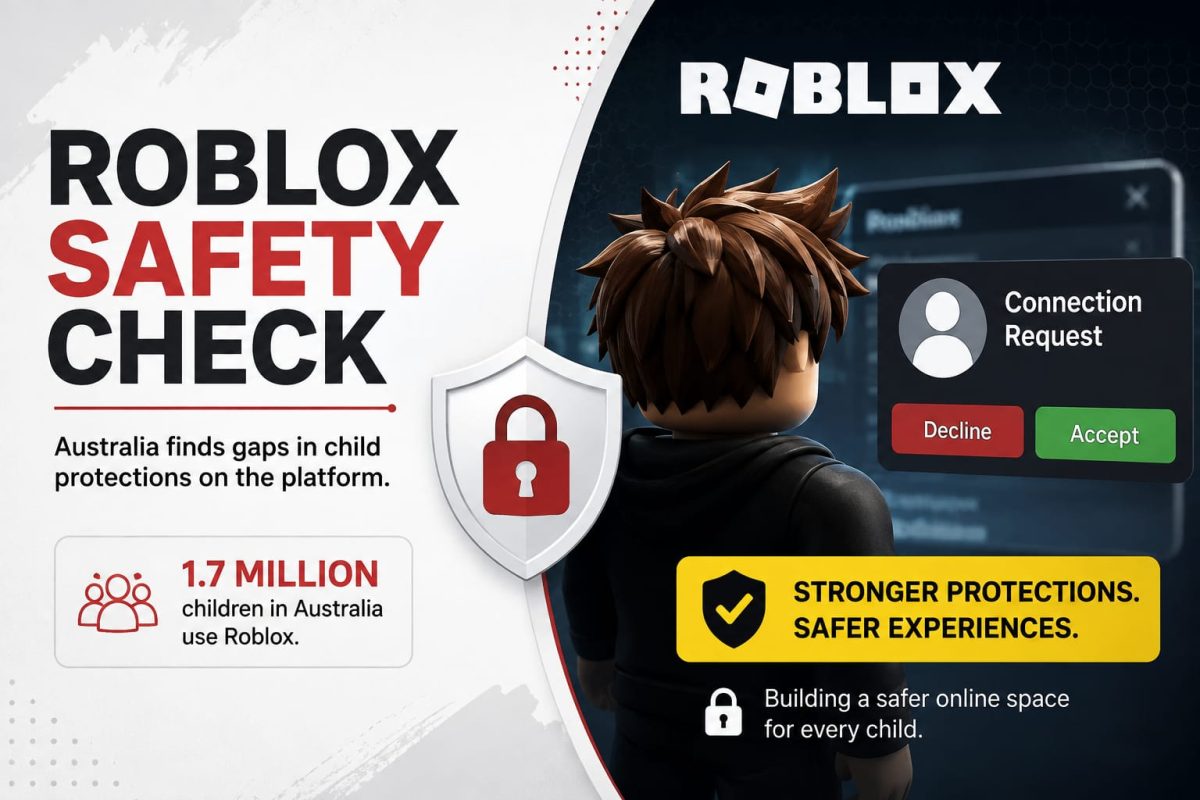
A safety investigation in Australia has found gaps in how Roblox protects children from unwanted contact with adults, raising fresh concerns about children’s safety on one of the world’s most popular gaming platforms.
Testing by Australia’s eSafety Commissioner found that adults could still send connection requests to children under 16 without parental consent. Some children’s profiles, connections and other account information could also be visible to other users. The findings came after Roblox had already introduced additional safety measures on the platform.
The regulator said the findings showed that existing protections were not doing enough to prevent unwanted adult-to-child contact. The issue is particularly important because about 1.7 million children in Australia use Roblox.
Following the investigation, Roblox entered into a court-enforceable agreement with the eSafety Commissioner. The company has three months to strengthen its protections, including making accounts belonging to children under 16 private by default and preventing adults from contacting children they do not know without parental or carer consent.
Roblox will also be required to improve its reporting systems so users can report harmful content or behaviour and receive information about how their complaints are handled. Its safety measures and age-estimation technology will also undergo independent assessment.
The case highlights a wider challenge for children’s online safety. Gaming platforms are no longer only places where children play games; many now include messaging, friendships and other social features. That means privacy, age checks and controls over who can contact children have become an important part of keeping young users safer online.
Australia’s eSafety Commissioner has also been examining safety practices across other gaming services, showing that the focus is increasingly shifting towards what platforms themselves do to prevent harm, rather than leaving children and parents to manage every online risk alone.