
Written by Alice Njoki
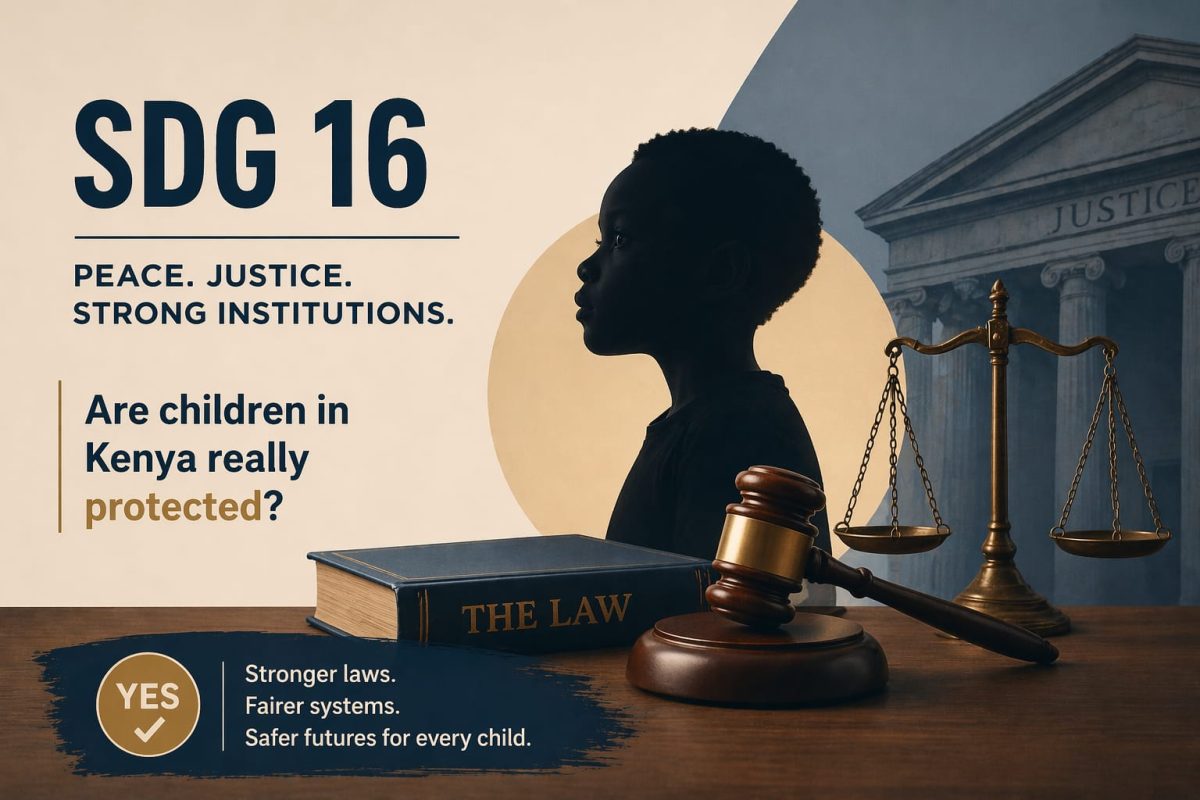
Across the world, governments have committed to the Sustainable Development Goals (SDGs), a set of targets developed by the United Nations to create safer, fairer, and more equal societies by 2030. One of these goals, SDG 16, focuses on promoting peace, reducing violence, ensuring access to justice, and building strong institutions that everyone, including children, can rely on.
For children, this goal is especially important. It is meant to ensure that they are protected from any form of harm, that their rights are respected, and that when something goes wrong, there are systems in place to respond fairly and effectively.
In Kenya, this responsibility is supported by the Children Act, which provides a legal framework for the protection and welfare of children. The Act is guided by the principle that the best interests of the child must always come first. It protects children from abuse, neglect, harmful practices, and exploitation, while also guaranteeing their rights to education, healthcare, and parental care.
The law also recognizes that children have a right to be heard. This means their views should be considered in decisions that affect them, including in legal and social processes. Institutions such as the Department of Children Services are mandated to enforce these protections, respond to cases of abuse, and support vulnerable children. These laws and institutions reflect the goals of SDG 16 by aiming to create systems that are fair, protective, and accountable.
However, sometimes the system does not work as expected and justice processes can be delayed .There are reported cases where children face abuse but experience delays in accessing justice, or where cases are not fully followed through. In some instances, matters are handled outside formal legal systems, which can limit accountability and leave children without proper protection.
Access to justice is also affected by factors such as lack of awareness, fear of stigma, and limited access to reporting channels, especially in marginalized areas. As a result, not all children are able to benefit equally from the protections provided by law.
At the same time, child protection is expanding beyond physical spaces. With increased use of digital platforms, children are also exposed to online risks such as cyberbullying and exploitation. While efforts are being made to address these challenges, systems are still adapting to respond effectively.
Organizations like UNICEF continue to support the strengthening of child protection and justice systems in Kenya. Their work, alongside government efforts, contributes to the broader goal of achieving SDG 16.