
Written by Gloria Ngatha
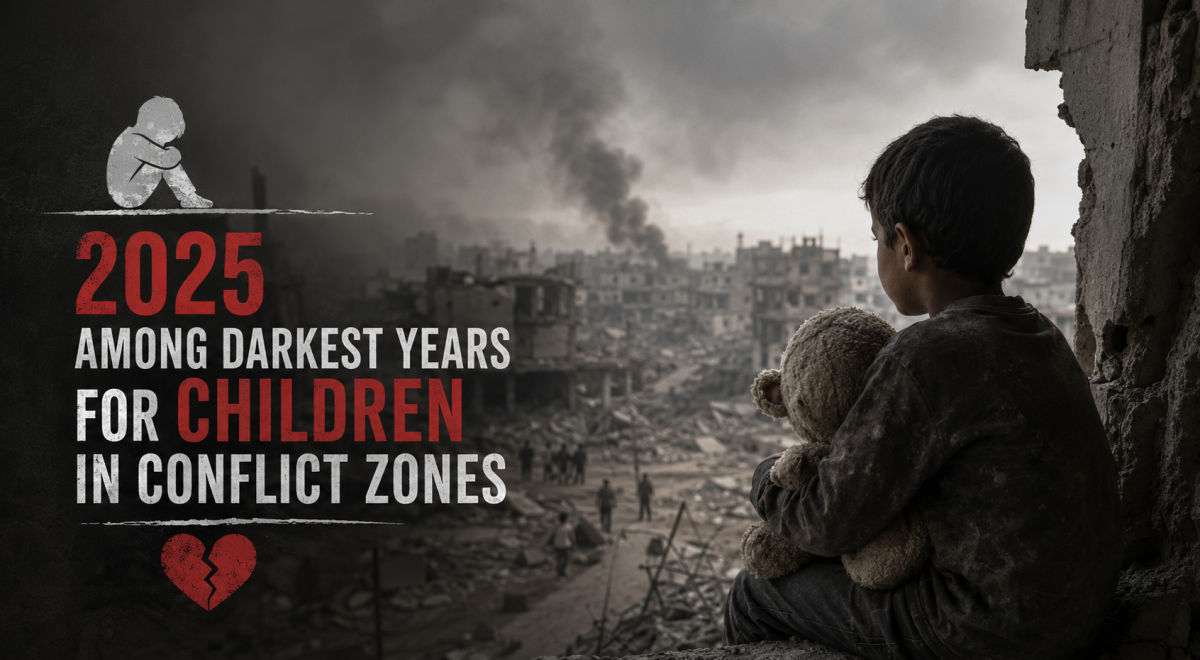
More children were affected by armed conflict in 2025 than at any other time in the last 30 years, according to a new United Nations report that describes the year as one of the darkest periods for child protection on record.
The UN documented 38,558 grave violations against children in2025, affecting more than 24,000 children worldwide.
Grave violations include killing and maiming, recruited into armed groups, abduction, sexual violence, attack in schools and hospitals and blocking of human aid.
The 38,558 violations recorded in 2025 represent the highest number since the UN began monitoring children affected by armed conflict three decades ago.
For the first time, government forces were identified as the primary perpetrators of grave violations against children for the first time since UN monitoring began.
The situations with the highest levels of violations were the Occupied Palestinian Territory and Israel, the Democratic Republic of the Congo, Nigeria, Myanmar and Somalia.
Killing and maiming remained the most verified violations, with 6,266 children killed and another 7,958 maimed in 2025. Moreover, these violations reached “alarming levels, with a surge of 34 percent and 10 percent respectively,” the report noted.
In many contexts, military strategies disregarded the principles of distinction and proportionality, the special protections afforded to children, and the obligation to take all possible precautions, placing children in foreseeable and avoidable danger.
Incidents of denial of humanitarian access followed at 8,322, while 6,607 children were recruited and used in hostilities. A further 5,129 children were abducted, often for recruitment, use or sexual violence.
Meanwhile, rape and other forms of sexual violence continued unsolved, with increasing verified cases of gang rape used as a tactic of war.
Children also remained vulnerable to landmines and explosive remnants of war, which continue to kill and maim even after conflicts have ended, with lifelong consequences for survivors including disabilities, trauma and barriers to education and reintegration.
Last year, 1,667 children were detained for their actual or alleged association with warring parties. Ms. Frazier stressed that these children must be treated as victims and that detention must be a measure of last resort, while underlining that reintegration programmes are essential to peace.
“Reintegration is where a child’s future – and our future as humanity – is rebuilt,” she said, urging the international community to step up political and financial support for children released from armed forces and groups, including those with disabilities.
She further called on all parties to immediately allow safe, rapid, and unimpeded humanitarian assistance.
The CAAC mandate turns 30 this year and although the situation for children deteriorated sharply in some areas last year, important advances did take place.
For example, 13,112 children formerly associated with armed forces or armed groups received protection or reintegration support, while some 40 commitments were taken by parties to conflict, including handover protocols, capacity building initiatives, unilateral commitments, and bilateral dialogues, in places such as Somalia, Ukraine, and Colombia.
As the Children and Armed Conflict mandate marks its 30th anniversary, the record number of violations serves as a reminder that millions of children continue to pay the highest price in conflicts they did not start. Protecting children must remain at the centre of peace and humanitarian efforts worldwide.