
Written by Alice Njoki
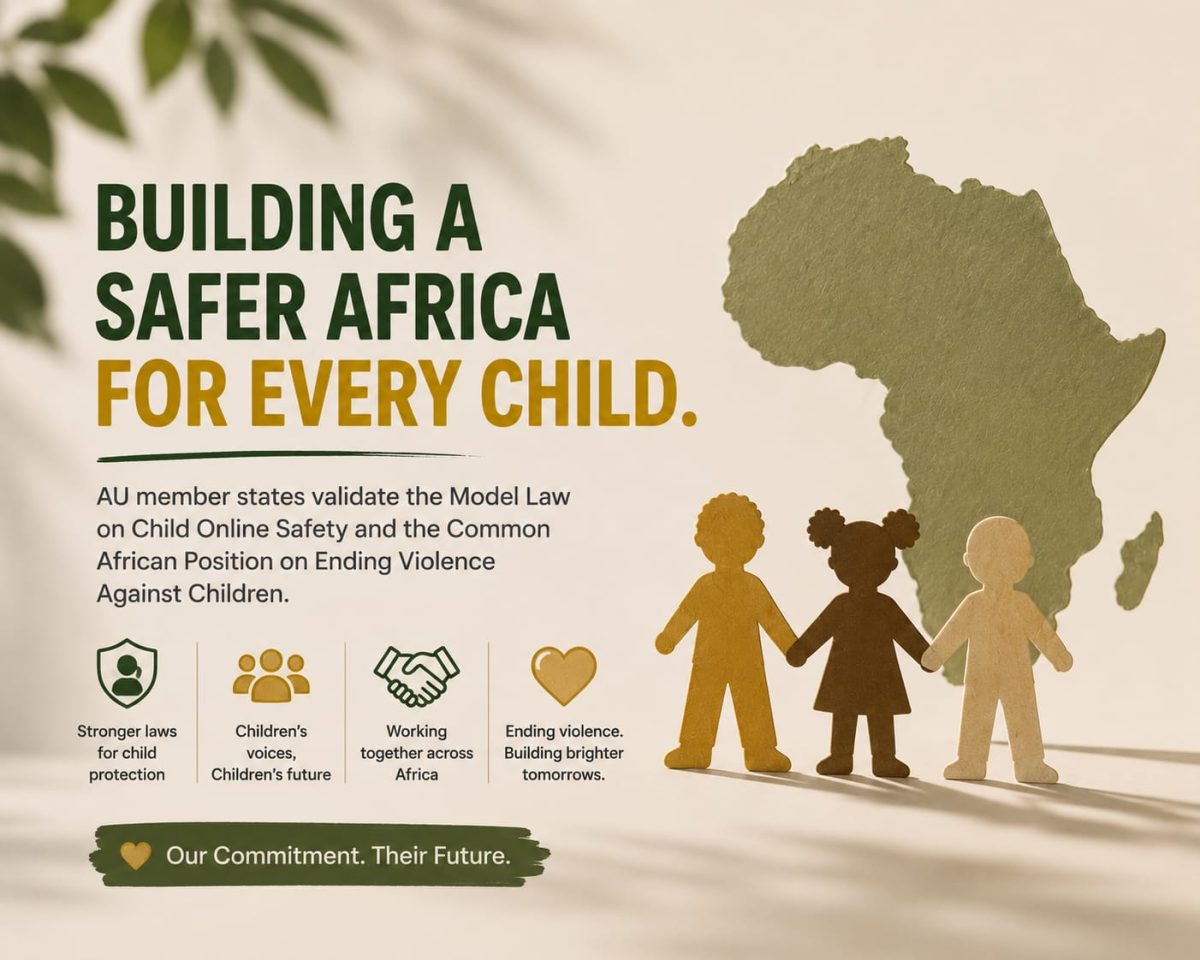
ADDIS ABABA, Ethiopia , African Union (AU) member states have validated the draft AU Model Law on Child Online Safety and Protection alongside the Common African Position on Ending Violence Against Children (CAP-EVAC), marking a significant step towards strengthening child protection across the continent. The two-day validation meeting brought together government representatives, child rights organisations, legal experts, development partners and children’s advocates to refine the two frameworks before they proceed to the next stage of the African Union approval process.
With children spending more time online than ever before, delegates acknowledged that the digital world offers opportunities for learning, creativity and connection, but also exposes children to cyberbullying, online exploitation, harmful content and growing privacy risks. The two frameworks aim to help African countries respond to these challenges while ensuring every child’s rights remain protected both online and offline.
Unlike a binding treaty, the AU Model Law on Child Online Safety and Protection is designed as a guide for member states developing or strengthening national legislation. It sets out common standards while allowing countries to adapt its provisions to their own legal systems, policies and social contexts.
The draft also promotes closer cooperation between countries in tackling online crimes against children. Officials clarified that this does not involve sharing children’s personal data. Instead, it allows authorities to cooperate by sharing evidence needed to investigate offenders, prosecute cross-border crimes and recover assets linked to child exploitation, while respecting national data protection laws.
Delegates proposed strengthening the responsibilities of technology companies by introducing a clearer duty of care, requiring platforms to identify and reduce risks before children are exposed to harm. They also recommended expanding Safety by Design measures, improving mandatory reporting systems, investing in digital literacy programmes and making child-friendly reporting and counselling services more accessible.
Artificial intelligence and emerging technologies also featured prominently. Rather than creating laws tied to specific platforms, participants recommended technology-neutral provisions that can evolve as new digital tools emerge. They further proposed safeguards requiring children to know when they are interacting with AI systems and encouraging companies to assess the potential impact of AI products on children’s rights before releasing them.
One of the more thought-provoking issues centred on children’s digital privacy in an era where family content creation has become a source of income. A participant asked:
“How does the Model Law envisage addressing situations where a child later exercises their privacy or data protection rights… when doing so could significantly affect the family’s livelihood?”
The question sparked wider conversations about the rise of kidfinluencers and the commercialization of children’s online content. Participants noted that future legal frameworks should better balance a child’s right to privacy, dignity and the removal of personal data with the financial interests of parents or guardians. Some also called for greater recognition of online child labor as an emerging child protection concern.
Children’s voices were recognized as a key part of the drafting process, with more than 100 children from across Africa contributing ideas and recommendations. Their contributions reinforced the importance of involving children in decisions that directly affect their digital lives.
Several recommendations were made to strengthen the draft further, including using clearer and more flexible language, adding practical case studies from different countries, strengthening protections for children with disabilities and neurodivergent children, and ensuring the framework remains a living document that can be updated as technology and online risks continue to evolve.
Alongside the model law, the Common African Position on Ending Violence Against Children calls for stronger child protection systems through better coordination, increased investment, improved data collection, meaningful child participation and greater accountability. Together, the two frameworks recognise that protecting children cannot be achieved by governments alone but requires the collective efforts of families, schools, communities, technology companies, civil society and development partners.
As one speaker reminded delegates, “No country has all the answers, but every country has valuable experiences to share.” That shared responsibility, participants agreed, will be essential in building safer digital spaces and stronger protection systems for every child across Africa.
The revised drafts will now incorporate the recommendations from member states before progressing through the African Union’s policy process. If endorsed, the AU Model Law on Child Online Safety and Protection is expected to be considered for adoption at the African Union Summit in January 2027, providing African countries with a common framework to strengthen child protection in an increasingly digital world.