
Written by Alice Njoki
Kenya has allocated billions of shillings to education in the 2026/27 financial year, yet some children are still learning in conditions that raise serious questions about equality, accountability and the meaning of free basic education. The education sector received KSh784.5 billion, including KSh136.6 billion for basic education, KSh7 billion for free primary education capitation, KSh54.6 billion for free day secondary education and about KSh30.9 billion for junior secondary school capitation. However, the reality in some public schools remains far from what these budget allocations promise.
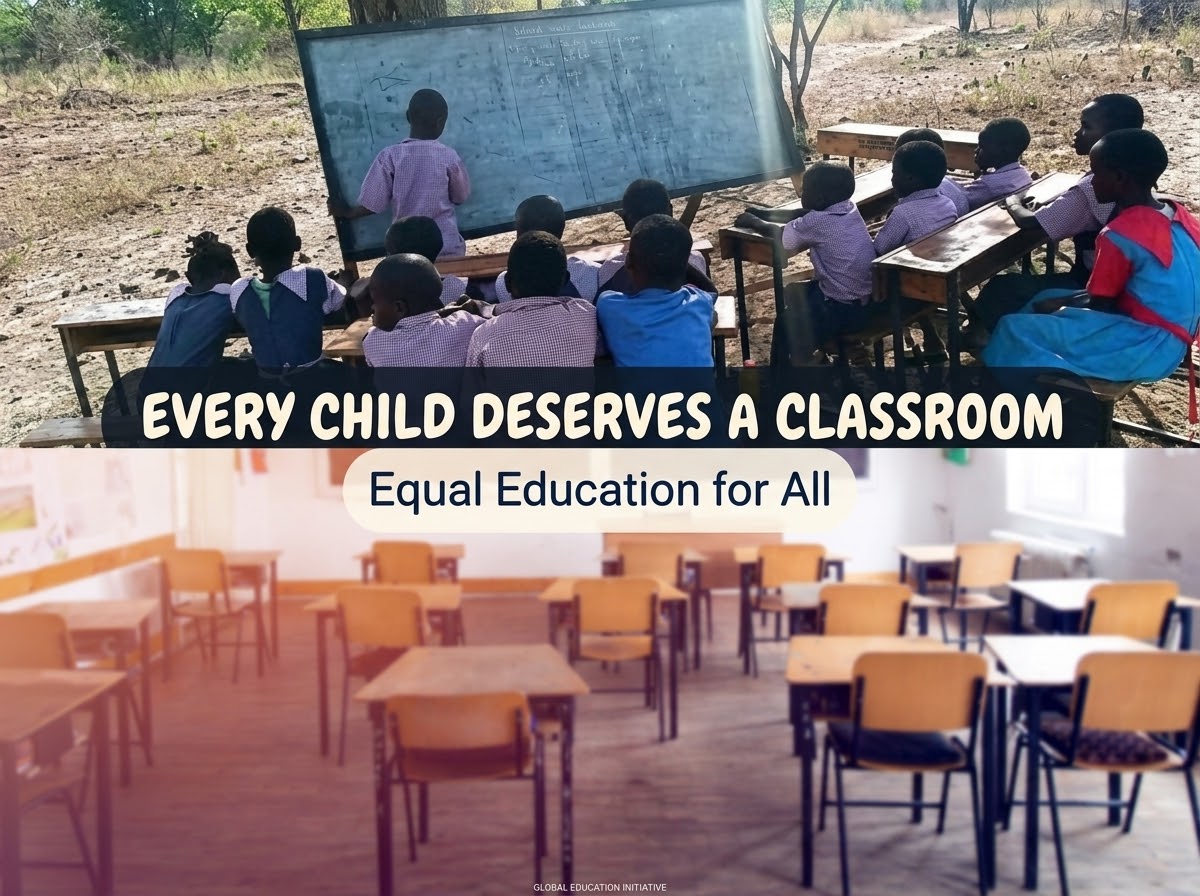
At Eldepe Comprehensive School in Marigat Ward, Baringo South, pupils have been shown learning under an acacia tree and inside deteriorating iron-sheet structures. Images shared online show learners seated on benches beneath the tree with a blackboard placed in the shade, while other classrooms appear to have mud floors, rough desks, poorly lit interiors and walls made of ageing corrugated iron sheets. The environment exposes children to rain, dust, wind and extreme heat, making it difficult for them to learn and concentrate.
The images were shared by Teacher Cillah, an educator and content creator, after she visited the school. Her post, shared on September 28, triggered public concern about why pupils are still learning outdoors in 2026. She questioned what happens when it rains or when the sun becomes too hot, and why teachers and communities should have to raise funds for basic classrooms. The school reportedly has Teachers Service Commission-posted teachers, meaning it is part of the public education system.
The Baringo case is not isolated. A January 2026 survey by Chalan Foundation, carried out in 51 schools across Baringo, Turkana, Bungoma, Homa Bay, Kitui, Samburu, Kajiado, Bomet, Nandi and West Pokot counties, found that many learners still face overcrowded classrooms, poor infrastructure and limited learning resources. The survey found that 28 per cent of learners were studying in classes with more than 60 pupils. It also reported that many schools lacked functional computer laboratories, especially in remote and underserved areas. These findings show that unequal learning conditions are still affecting children in different parts of Kenya, not only in Baringo.
Whereas the Constitution of Kenya guarantees every child the right to free and compulsory basic education under Article 53(1)(b). However, education cannot be equal or meaningful when some learners have modern classrooms, desks, libraries and learning materials while others study under trees or in weak iron-sheet structures. Children in poorly equipped schools are still expected to compete in the same examinations as those in better-resourced schools, which is unfair.
There is the National Government Constituencies Development Fund (NG-CDF), a public fund meant to support development projects within constituencies, including the construction and renovation of classrooms, purchase of desks, toilets, laboratories and other school facilities. It should be able to support needy schools so that children are not left learning under trees or in unsafe iron-sheet structures. MPs provide leadership in identifying constituency priorities, while NG-CDF committees should ensure funds are directed to the schools that need them most and that projects are completed. The Ministry of Education also has a duty to provide funding, set standards and regularly inspect schools to identify those without safe classrooms, desks, toilets, water and adequate learning materials. County governments, governors, MCAs, ward leaders and school boards should also include neglected schools in their development plans. When public funds are available but children continue learning in poor conditions, the responsible institutions must act to ensure every learner has a safe environment and an equal chance to receive quality education.