
Written by Alice Njoki
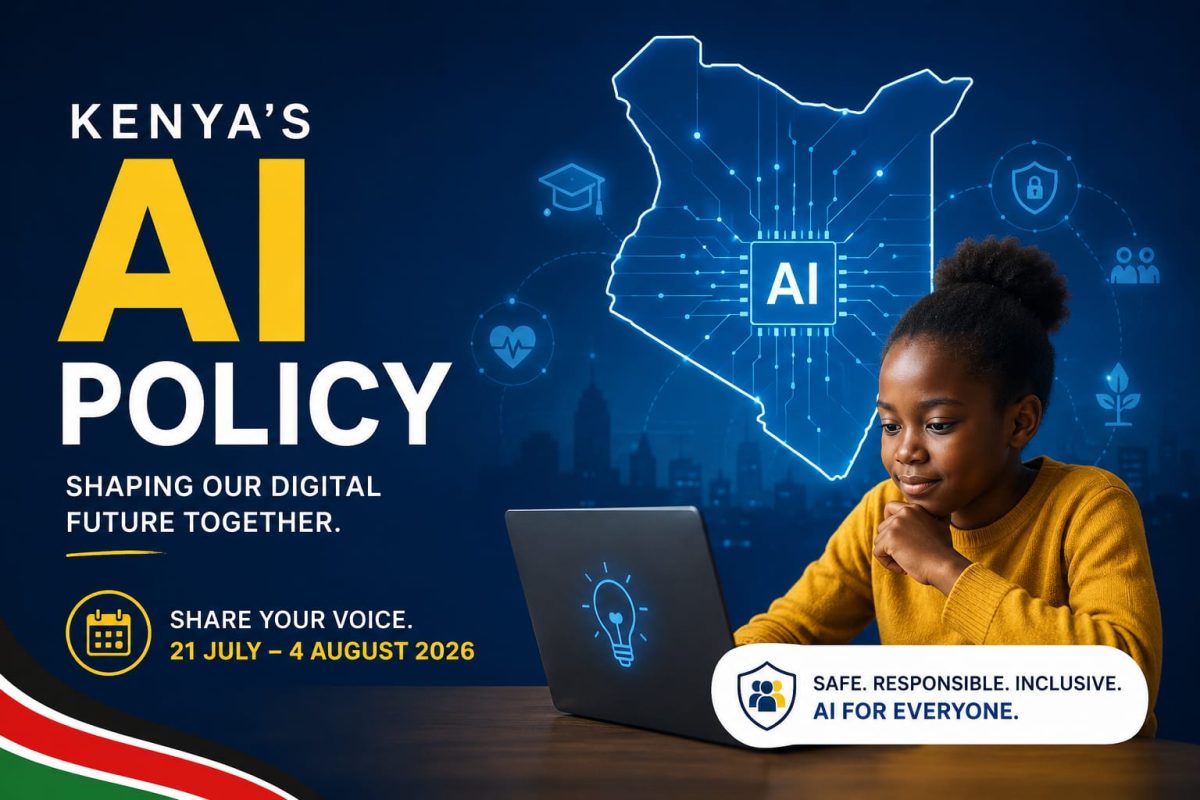
On 21 July 2026, the Ministry of Information, Communications and the Digital Economy opened Kenya’s Draft Artificial Intelligence (AI) and Other Emerging Technologies Policy for public participation, inviting Kenyans to share their views on how Artificial Intelligence should be developed, used, and regulated in the country. The consultation will remain open until 4 August 2026, after which the government will review the feedback before finalising the policy.
The draft is Kenya’s first national policy on Artificial Intelligence. It seeks to establish clear guidelines for how AI will be developed, governed, and used across the country while promoting innovation, protecting people’s privacy and personal data, and ensuring the technology is used responsibly and ethically.
Following the rapid growth of Artificial Intelligence in Kenya, the draft policy has been introduced at a time when AI is becoming part of everyday life. According to the Digital 2026 Mid-Year Global Update Report, 97.5% of online adults in Kenya use AI tools every month, making Kenya the country with the highest reported monthly use of AI in the world. As more people use AI for learning, work, business, research, and creating digital content, the government says clear guidelines are needed to encourage innovation while addressing concerns such as privacy, security, accountability, and the responsible use of the technology.
If approved ,the proposed policy is expected to guide the use of AI in sectors such as education, healthcare, agriculture, finance, manufacturing, public services, and scientific research. It also aims to create an environment where AI can support economic growth while protecting human rights and building public trust in the technology.
The Ministry is encouraging members of the public, including technology experts, businesses, educators, parents, young people, and other stakeholders, to review the draft policy and submit their views before the consultation closes on 4 August 2026. As AI becomes increasingly common in classrooms, workplaces, and everyday life, the policy will help shape how the technology is used by everyone ,including children and young people. The feedback received during the public participation process will help ensure Kenya’s first national AI policy reflects the needs and interests of the people before it is finalised.