
Written by Gloria Ngatha
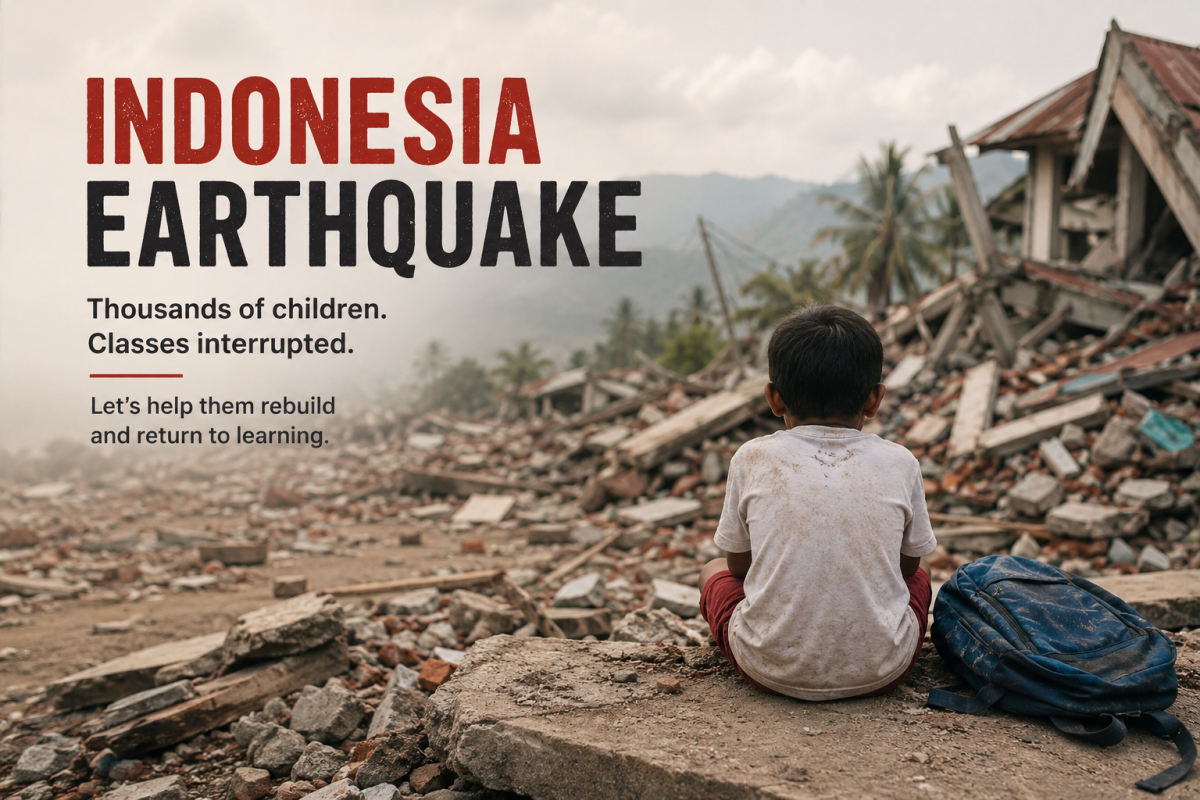
A powerful magnitude 7.7 earthquake struck Indonesia’s Flores Island on Saturday, August 15, has left thousands of families without homes and disrupted the education of more than 8,000 children.
The earthquake struck shortly before 6 a.m. local time in East Nusa Tenggara, a province in eastern Indonesia. At least 68 people have died and 213 people have been injured, according to Indonesian authorities. More than 19,000 people have been forced to stay in tents, evacuation centres and other temporary shelters after their homes were damaged.
The disaster has caused widespread destruction across Flores. Authorities reported that at least 4,500 homes were damaged, while 252 schools, 122 health facilities and 84 places of worship were also affected.
More than 8,000 children and teenagers in East Nusa Tenggara are facing interruptions to their education and increased safety risks. The organisation also reported damage to 87 education facilities and 18 health centres in the areas it was assessing.
For children, being unable to attend school means more than missing lessons. Schools can provide children with safety, routine, friends and support. Aid organisations are therefore working to help children return to learning while also supporting their emotional well-being.
Many children are still frightened because the earthquake has been followed by thousands of aftershocks.
The Associated Press reported that more than 2,100 aftershocks had been recorded by Tuesday, although only about 70 were strong enough to be felt by residents. Some children have become upset whenever the ground moves again. In evacuation camps, aid workers and volunteers are providing psychosocial support to help children cope with fear and stress.
It is reported that children in the affected communities are particularly vulnerable because Flores was already dealing with other problems, including drought linked to El Nino and volcanic risks associated with Mount Lewotobi. The organisation warns that these challenges can affect children’s health, education and emotional well-being.
Rescue teams are still working to reach communities cut off by landslides and blocked roads. Food, clean water, medicine, tents and other emergency supplies are being taken to families, but reaching some areas remains difficult. Emergency field hospitals are also being prepared because several health facilities were damaged.
The governor of East Nusa Tenggara has declared a 14-day state of emergency to help authorities organise the response.
Caritas Indonesia has also mobilised volunteers and church organisations to help affected communities. Its priorities include providing drinking water, food, shelter, hygiene supplies and healthcare, with special attention to children and other vulnerable people.
Indonesia is located along the Pacific Ring of Fire, an area where several tectonic plates meet. This makes the country highly vulnerable to earthquakes and volcanic eruptions.
Flores itself has experienced major disasters before. In 1992, an earthquake followed by a tsunami killed about 2,500 people on the island.
The latest disaster has reminded authorities and aid organisations of the importance of preparing communities for emergencies and making sure children are protected when disasters happen.
Save the children says its immediate priorities include restoring children’s access to education and helping families recover their livelihoods. The organisation says this is important to reduce longer-term risks such as loss of learning, malnutrition, child labour and early marriage.