
Written by Naomi Chemutai
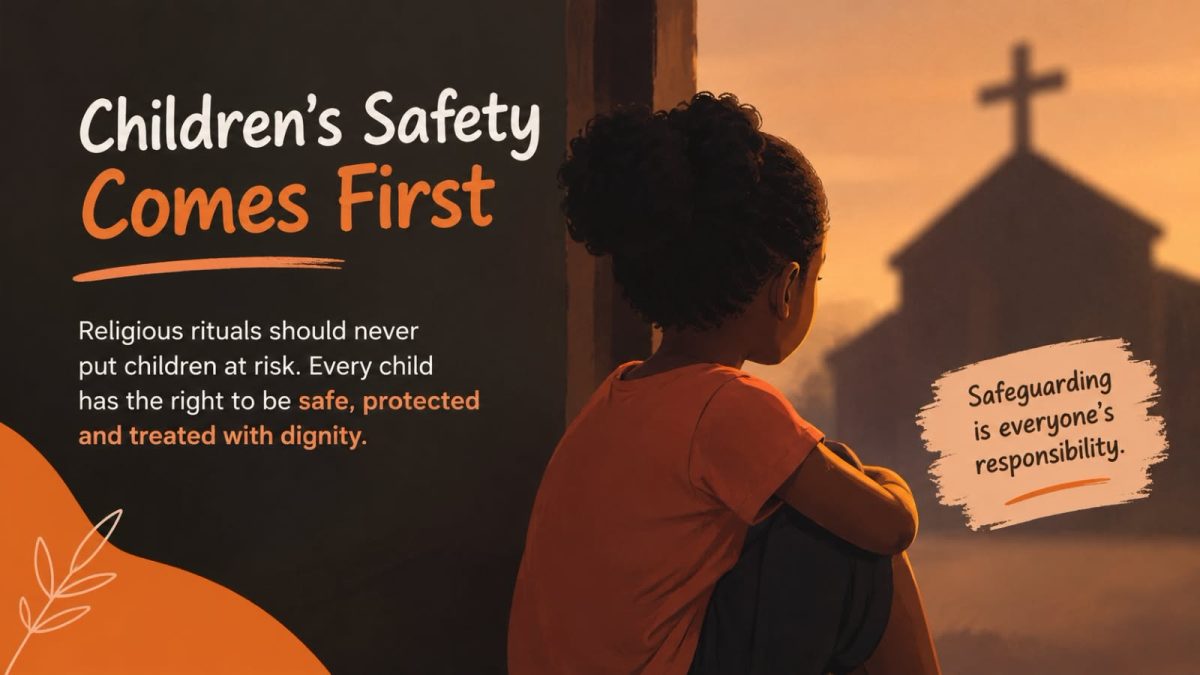
Four children reportedly suffered burn injuries during an alleged religious cleansing ritual at a church in Bondo Sub-County, Siaya County, raising serious concerns about child safeguarding, adult responsibility and the protection of children in spaces intended to provide care, guidance and safety.
According to media reports published on 9th October 2026, the incident was linked to an alleged cleansing ritual at St. Abraham Israel Assemblies of God Church, where children were reportedly exposed to boiling water in an attempt to cast out evil spirits. Four people were arrested as investigations commenced, while authorities ordered the church’s closure. The allegations remain subject to investigation, and the responsibility of each individual must be established through due process.The incident reportedly came to light after a tipoff from the members of the public. Four children burned during alleged exorcism ritual in Bondo
While the children’s injuries are the immediate concern, the circumstances surrounding the incident raise wider questions: Who was responsible for protecting these children? Were the risks explained to their caregivers? Were appropriate safeguarding measures in place? And what can be done to prevent similar incidents?
Places of worship play an important role in many communities. They provide spiritual guidance, social support, hope and a sense of belonging. Parents and caregivers may therefore place considerable trust in religious leaders, believing that their children will be safe under their care.
However, trust must never replace safeguarding. Children depend on adults to make decisions that protect their safety and wellbeing. They may not understand the risks associated with a particular ritual, may be unable to refuse an adult’s instructions, or may fear challenging an authority figure.
Religious freedom and the right to practise one’s beliefs must be exercised consistently with children’s rights and protection from violence, abuse and harmful treatment. No spiritual, cultural or traditional explanation should be used to justify conduct that endangers a child.
According to a Citizen TV news report aired on Saturday, 10 October 2026, two of the four children who sustained burn injuries in Bondo, aged three and five, suffered severe injuries and were transferred to Kisumu for further medical treatment. The other two children remain at home, where they are recovering from their injuries.
Stephen Osoi, the Assistant County Commissioner for Maranda, stated that those arrested in connection with the incident are expected to be arraigned in court on Monday, 12 October 2026. One of the suspects, an 85-year-old, had been released on bond but is also expected to appear in court on the same date. Osoi expressed appreciation to members of the public who had provided information to assist the investigation. He also urged others to cooperate with the authorities and share any relevant information that could help establish the facts surrounding the incident. One suspect in Bondo church exorcism case released on police bond
The Israel Assemblies of God church Archbishop responded to the incident by saying: “The St. Abraham Ogago church joined our denomination on 28th June 2026. The purported healing activity by Clinton Obudho was not authorised or approved by the national leadership. We disassociate from any conduct that endangers human life, cause injury or violate the constitution”
The child safeguarding issues raised by the incident:
- Physical abuse and exposure to harm
The reported burns raise serious concerns about possible physical abuse and the exposure of children to a dangerous practice. Children have a right to protection from physical injury, violence and treatment that threatens their health or dignity.
- Failure to uphold the child’s best interests
Every decision involving a child should prioritise the child’s best interests, safety and development. In situations involving religious or spiritual interventions, adults must not allow their beliefs or expectations to override a child’s physical safety.
- Parental responsibility and informed decision-making
Parents and caregivers have a critical responsibility to protect children from harm and seek appropriate assistance when their safety is threatened.
What does kenya’s child protection framework require
Kenya’s Constitution and Children Act, 2022 provide a framework for protecting children from abuse, neglect, violence and harmful practices.
Article 53 of the Constitution of Kenya establishes the child’s right to protection from abuse, neglect, harmful cultural practices, all forms of violence, inhuman treatment and punishment. It also provides that a child’s best interests are of paramount importance in every matter concerning the child.
The Children Act, 2022 reinforces children’s rights and the responsibilities of parents, caregivers and institutions to safeguard children’s welfare.
These protections apply regardless of where a child is harmed, may it be at home, in school, in a community setting or within a religious institution.