
Written by Gloria Ngatha
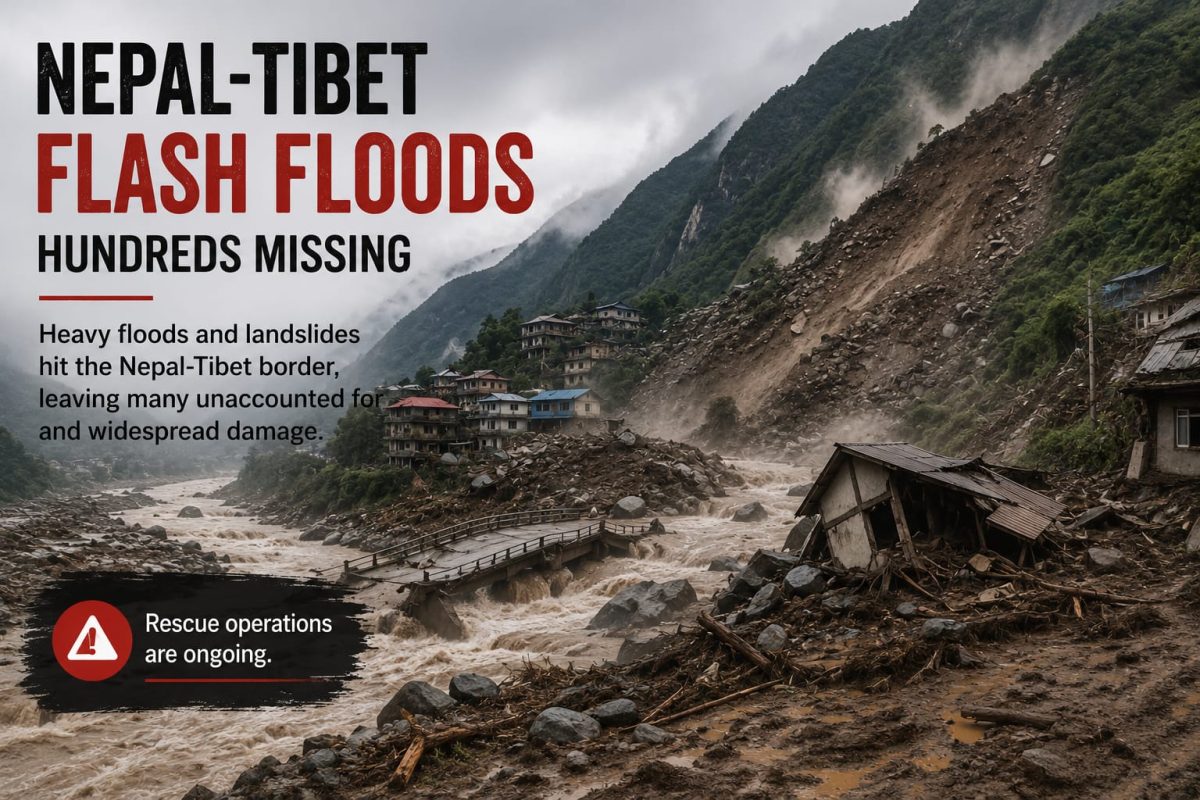
At least 160 people have lost their lives after flash floods swept through areas along the Nepal-Tibet border on Wednesday, August 26. Hundreds of people are still missing as rescue teams search for survivors and try to reach communities cut off by the disaster.
The flooding happened in Nepal’s Rasuwa District, near the Rasuwagadhi border crossing with Tibet, which is part of China. It also affected Gyirong County on the Tibetan side of the border.
Floodwaters carrying large amounts of mud, rocks, ice and other debris moved through the mountainous region, damaging buildings, roads, bridges and power infrastructure.
The cause of the disaster was not immediately clear. Early reports suggested that an earthquake may have triggered an avalanche or landslide that sent water and debris into the river.
Scientists later found that the seismic signal recorded during the event was not caused by an earthquake. The United States Geological Survey said the signal was produced by the collapse of ice and rock from a glacier. A large section of the glacier collapsed from a high part of the Himalayan mountains. The falling ice and rock moved down the mountain and into the river, carrying water, mud and other material with it. This created a sudden surge of water that travelled downstream.
Because the area is mountainous, the water and debris moved quickly through river valleys. Flash floods can develop within a short period of time, leaving people with very little time to move away from dangerous areas.
Nepalese authorities reported at least 157 people had lost their lives on the Nepalese side, while China reported three deaths on the Tibetan side. The combined figure was at least 160 in the initial reports, although the number is expected to change as rescue teams reach more areas and authorities confirm information.
Many people are also still unaccounted for. Those reported missing include people who live in the affected communities as well as workers, tourists and religious pilgrims travelling through the region.
Chinese authorities reported 558 people missing in Gyirong County, including 260 foreign nationals. Nepal also reported more than 400 travellers missing. Officials are still checking these figures, so it is not yet clear how many of the reports refer to different people.
Several countries are also trying to locate their citizens who may have been in the affected areas. People from countries including India, the United States, Australia, the United Kingdom, Canada and South Korea were among those reported missing or affected.
The flooding caused major damage to roads and bridges, making it harder for rescuers to reach affected communities. At least 19 motorable bridges in Nepal were reported to have been washed away or damaged.
A road connecting Betrawati to the Rasuwagadhi border crossing was also badly damaged. The loss of these transport routes has left some communities isolated and increased the need for helicopters and other emergency support. The disaster also affected Nepal’s electricity infrastructure. At least eight operating hydropower projects with a combined capacity of about 354 megawatts were reported damaged.
Nepal has deployed members of its Army, Armed Police Force and police to the affected areas. Helicopters are being used to search for missing people, evacuate survivors and deliver emergency supplies. The rescue operation has been difficult because of damaged roads, disrupted communication networks, poor weather and the steep Himalayan terrain. Rescue teams also have to be careful in areas where further landslides or flooding could occur.
China has also deployed rescue personnel on the Tibetan side of the border to search for missing people and assist communities affected by the flooding.
India has offered emergency assistance to Nepal, including temporary shelters, blankets, hygiene kits, solar lamps and medicines. The United Nations and other humanitarian organisations are also supporting the emergency response.
UN Secretary-General António Guterres expressed sadness over the disaster and said UN teams and partners were mobilising supplies and personnel to support people affected by the flooding. The disaster has also raised concerns about the changing conditions of glaciers in the Himalayan region. The Hindu Kush Himalaya is experiencing rising temperatures, and glaciers across the region are losing ice.
Scientists say changes in glaciers, snow and frozen ground can affect the stability of mountain environments and increase the risk of hazards such as landslides, avalanches and sudden floods. However, scientists have not confirmed that climate change directly caused this particular glacier collapse. Researchers are still studying the conditions that led to the collapse.
The disaster has also highlighted why early-warning systems are important for communities living near rivers and below glaciers. Monitoring glaciers, rivers and mountain slopes can help authorities identify risks and give people more time to move to safer areas.
For now, rescue teams are continuing to search for people who are missing, assist survivors and assess the damage. The number of people who have lost their lives or remain missing may change as more areas become accessible and authorities verify the information.