
Written by Gloria Ngatha
The Kenyan government is reviewing its National Policy on the Elimination of Child Labour in a move aimed at protecting children from exploitation and ensuring they have the opportunity to enjoy their childhood and attend school.
The review seeks to address child labour in areas such as agriculture, domestic work and informal businesses, where some children are exposed to unsafe working conditions.
Senior Deputy Labour Commissioner Millicent Muli said the government wants to strengthen the existing policy to respond to the changing challenges facing children and vulnerable families. She spoke during a public participation meeting in Kericho County, where government officials, child rights organisations and other stakeholders were invited to share ideas on how to eliminate child labour.
Kenya introduced its National Policy on the Elimination of Child Labour in 2015. However, challenges such as poverty, school dropouts, limited family income and inadequate social protection continue to expose children to harmful work.The government says the revised policy should strengthen how child labour cases are identified, reported and addressed.
It also aims to improve cooperation between national and county governments, employers, parents and child protection organisations.
According to the government, agriculture remains one of the areas where children face serious risks.Some children are involved in activities such as farming, carrying heavy loads and handling agricultural produce. During the Kericho meeting, an occupational safety officer, Anthony Wanjau, raised concern about children carrying heavy loads at tea collection centres.He warned that such activities could affect children’s developing bodies and cause long-term health problems.
Domestic work and informal businesses are also areas of concern because some children may work for long hours, miss school or experience unsafe conditions.
According to figures from the US Department of Labour’s 2024 findings on child labour in Kenya, approximately 782,258 children aged 5–14—representing about 5.9% of that age group—were reported to be working. About 96.6% of working children in this age bracket (roughly 755,660 children) were involved in agriculture, far more than in services (3.1%) and industry (0.3%). Around 92.4% of all children aged 5–14 (roughly 12.25 million children) were attending school, while 6.2% of children aged 7–14 combined work with schooling.
These figures show why protecting children from harmful work while supporting their education remains important. The figures refer to children’s work and should not be interpreted as meaning every child doing some work is experiencing exploitation. U.S. Department of Labor
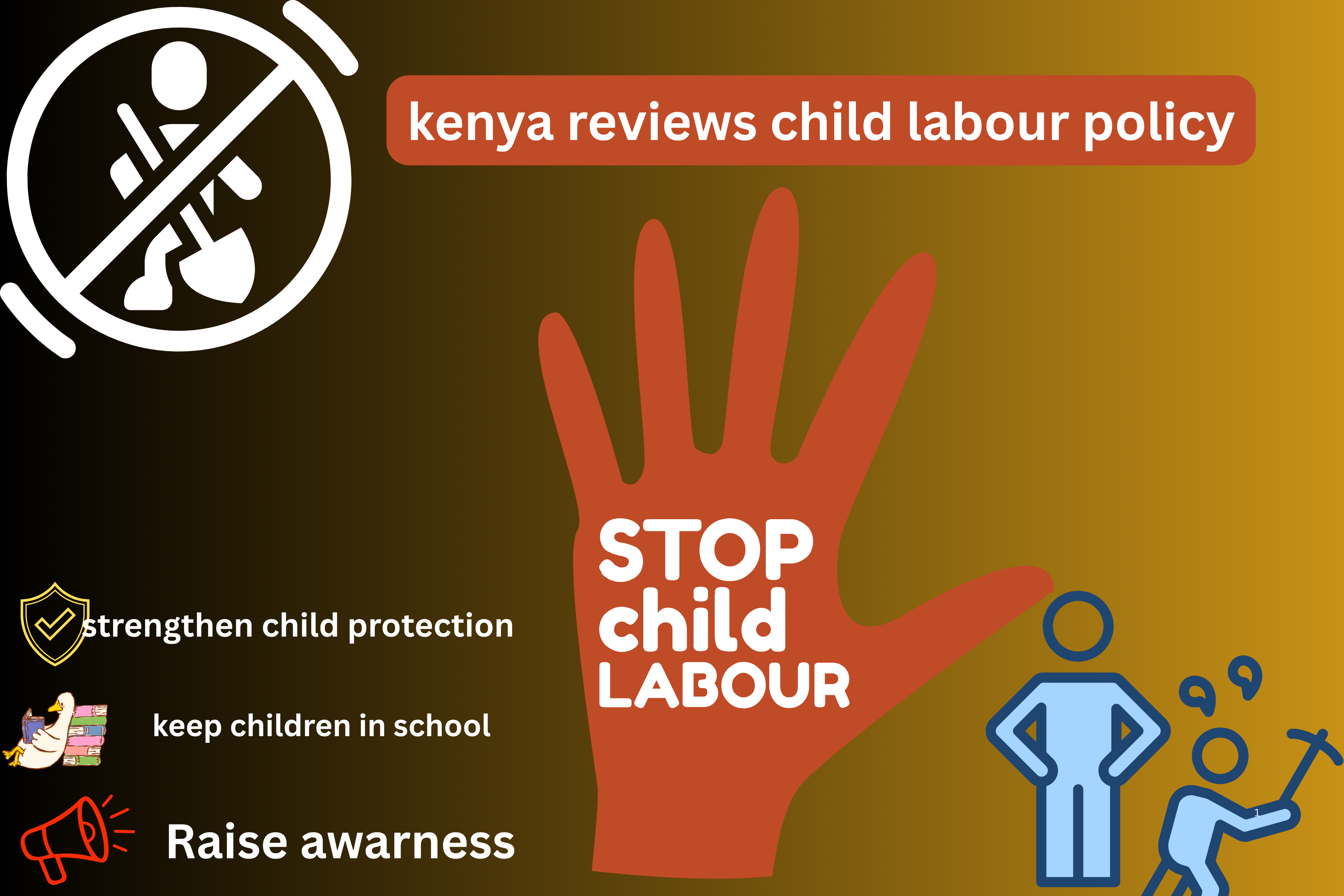
The policy review focuses on several important actions:Keeping children in school: Supporting children to access education instead of engaging in harmful work.Protecting vulnerable families: Improving household livelihoods so families are less likely to depend on children’s earnings.Strengthening inspections: Improving workplace inspections to identify and address child labour.Raising awareness: Educating parents, employers and communities about children’s rights. Improving reporting: Making it easier for people to identify and report cases of child exploitation.Supporting affected children: Ensuring children removed from harmful work receive education, protection and other necessary support.
These priorities were highlighted during the government’s policy review discussions
Kenya’s Constitution protects children from exploitative labour and work that is harmful to their health, education and development.
The International Labour Organization (ILO) has also been working with the Kenyan government to strengthen child protection systems, support vulnerable families and improve cooperation between organisations fighting child labour.
The government is encouraging members of the public to participate in the policy review and suggest practical ways of protecting children.
As Kenya works towards eliminating child labour, the message is clear: every child deserves an opportunity to learn, play, grow and build a better future without exploitation.