
Written by Alice Njoki
In South Sudan, millions of children are facing a worsening hunger crisis driven by conflict, displacement, and climate shocks, according to a joint report released on April 28, 2026 by UNICEF, the World Food Programme (WFP), and the Food and Agriculture Organization (FAO).
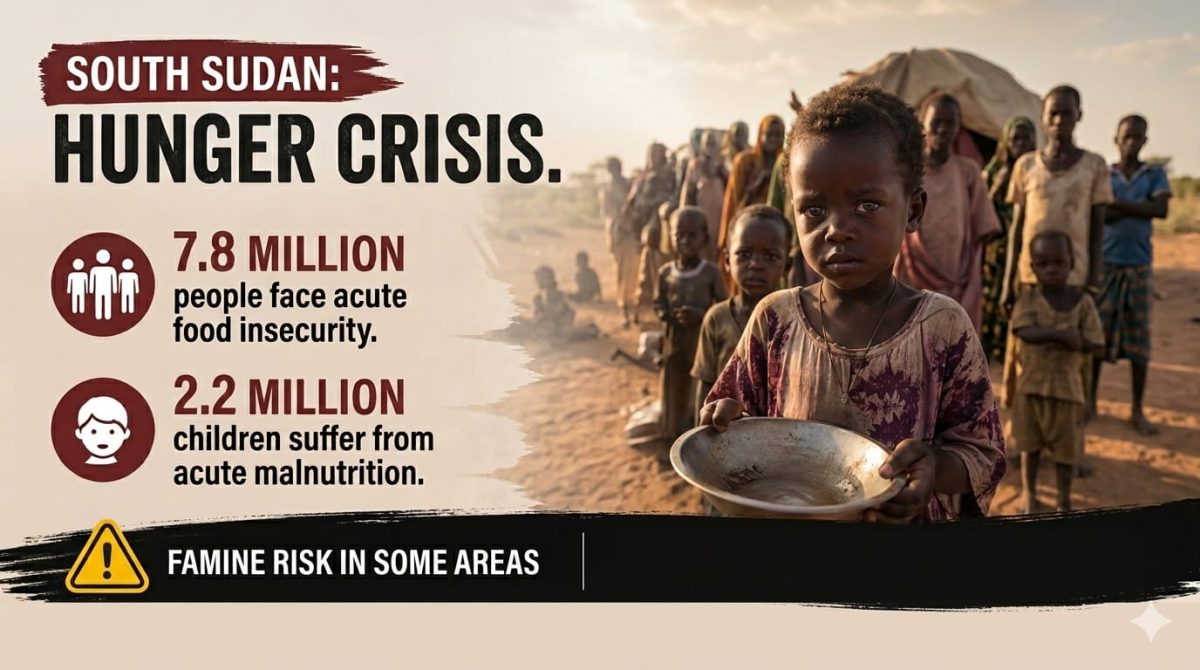
The agencies report that about 2.2 million children under five are currently suffering from acute malnutrition, with nearly 700,000 at risk of severe malnutrition, the most dangerous form that can lead to death if not urgently treated. The situation is part of a wider crisis affecting 7.8 million people over half of the country’s population who are expected to face high levels of food insecurity between April and July this year.
The worsening conditions are largely caused by ongoing conflict that has forced families from their homes, destroyed livelihoods, and limited access to food and essential services. In areas such as Jonglei State, large numbers of people have been displaced, leaving communities cut off from markets and humanitarian assistance. At the same time, flooding and poor agricultural production have reduced food availability, while rising prices have made it harder for families to afford basic needs.
Children are the most affected, as many are unable to access proper nutrition and healthcare. Several health facilities have been damaged or closed due to insecurity, reducing the availability of life-saving treatment. Disease outbreaks, including cholera, malaria, and measles, are further worsening the situation, especially for already malnourished children. In addition, about 1.2 million pregnant and breastfeeding women are also acutely malnourished, increasing the risks for both mothers and their infants.
Aid agencies have warned that some of the hardest-hit areas, particularly in Upper Nile and Jonglei states, are at risk of famine if conditions continue to deteriorate. Ongoing insecurity and restricted humanitarian access are making it difficult to reach vulnerable populations with food and medical support.
The UNICEF, World Food Programme, and Food and Agriculture Organization are calling for urgent action, including increased funding, safe access for aid delivery, and protection of civilians. They warn that without immediate intervention, millions of lives, especially those of children, remain at serious risk.